In an era where only 14 percent of 13-year-olds report reading for fun almost every day (Harvard Gazette) and fewer than a third of students nationwide are working at the proficient level in reading (NAEP), a curious paradox emerges. We live in the most technologically advanced age in human history, yet our children’s fundamental cognitive abilities—reading, writing, critical thinking—are in steep decline.
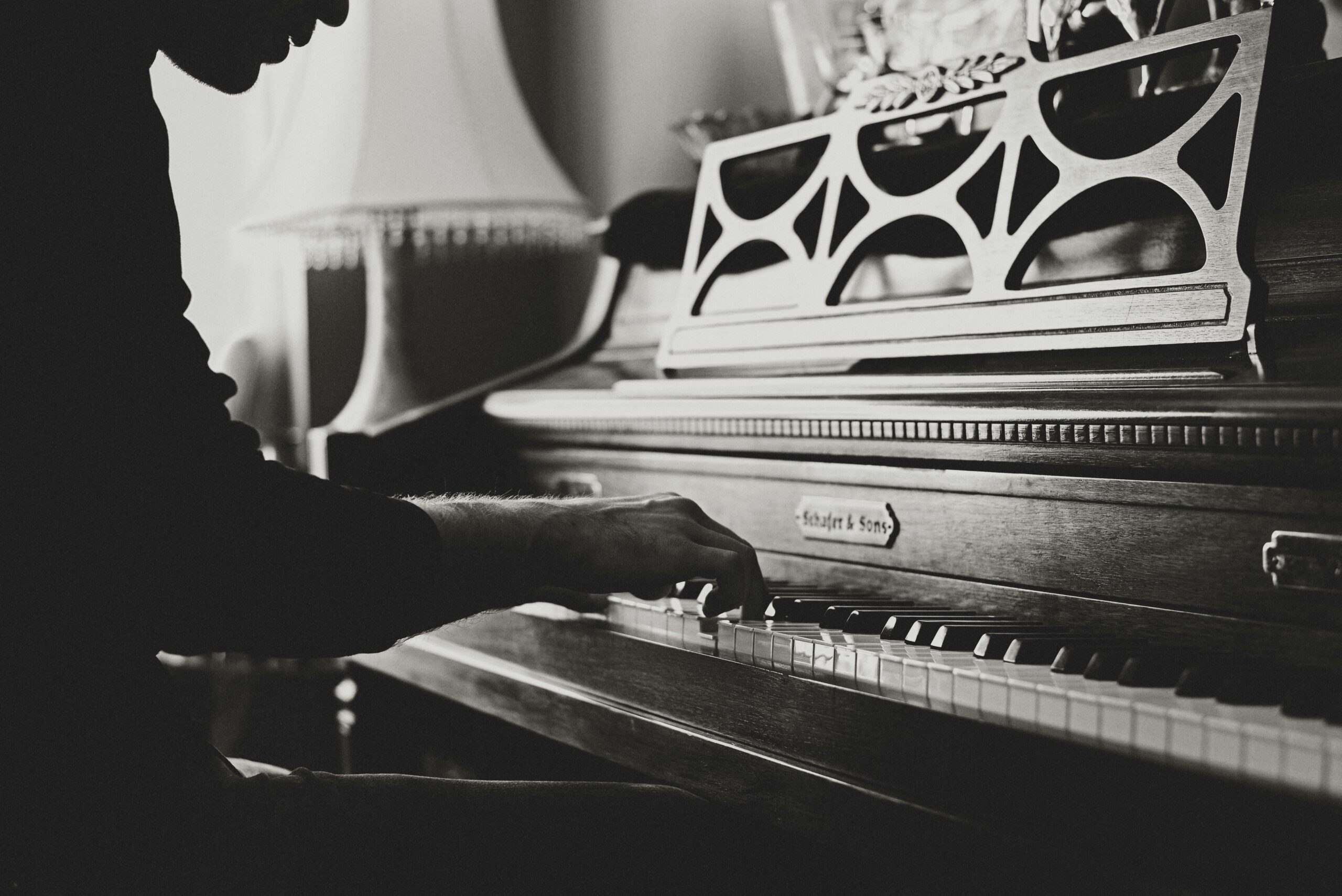
Meanwhile, in living rooms and music studios across the country, a different story unfolds. Children sit at piano benches, fingers poised over black and white keys, engaged in a practice that demands something screens cannot provide: authentic, unmediated human effort. No shortcuts. No AI assistance. Just the raw connection between mind, body, and music.
Could this centuries-old instrument be the antidote to our modern cognitive crisis?
- The Crisis
- Plummeting Literacy
- Screen Time and Attention
- AI Dependency
- Piano: The Antidote
- No Shortcuts
- Piano Study Makes Us Genuinely Smarter
- Building Executive Function
- The Discipline Dividend
- A Call to the Keys
- Practical Solutions
- Conclusion
THE CRISIS
PLUMMETING LITERACY
The numbers paint a sobering picture. Average reading scores dropped by two points for both fourth and eighth graders in 2024, continuing declines that started before the pandemic (EdSurge). More troubling still, only 47% of kindergarten students were reading at grade level during the 2021-2022 school year (RealClearEducation), setting the stage for long-term academic struggles.
The literacy crisis extends beyond basic reading skills. The cost to taxpayers of adult illiteracy is $224 billion per year in 1999 dollars. That amounts to $409 billion in today’s currency (U.S. Senate Committee on Health, Education, Labor & Pensions). This isn’t just an educational problem. It’s a societal emergency that threatens our economic competitiveness and national security.
THE SCREEN TIME EPIDEMIC
Our children’s attention spans are under assault. There has been a 52% increase in children’s screen time between 2020 and 2022 (SALLY GODDARD BLYTHE), with devastating consequences for cognitive development. Research shows that children who spent more than two hours in front of a a screen had 7.7 times more of a chance of meeting the criteria for an ADHD diagnosis compared to those who watched less than 30 minutes per day (WebMD).
Each one-hour increase in TV exposure at two years of age corresponds to a 7% decrease in participation in class and a 6% decrease in math proficiency in the fourth grade (PubMed Central). The effects are cumulative and long-lasting, creating what researchers fear may be permanent cognitive deficits.
AI DEPENDENCY
Perhaps most concerning is the rise of AI-enabled academic shortcuts and cognitive outsourcing. “College is just how well I can use ChatGPT at this point,” one student admitted, capturing a widespread phenomenon where students are increasingly offloading their cognitive labor to AI (Marketing AI Institute).
The use of AI in academia represents one more progression in the abolition of logical thought, with no struggle, exploration or engagement with information to support a genuine learning process in cultivating critical thinking (The Hill). When students can generate essays, solve problems, and complete assignments with a few prompts, the fundamental skills of reasoning, analysis, and creative problem-solving atrophy.
New research from MIT found that subjects who used ChatGPT for writing tasks demonstrated the lowest brain engagement and consistently underperformed at neural, linguistic, and behavioral levels (Dazed). The technology designed to enhance our capabilities may actually be diminishing them.
PIANO: THE ANTIDOTE
NO SHORTCUTS
Unlike digital work, homework, or essays that can be outsourced to AI, piano performance represents pure, unfiltered human achievement. When a child sits at a piano bench for a recital, there are no algorithms to help, no copy-paste shortcuts, no AI to fill in the gaps. What emerges from the keys is exactly what the child has practiced, learned, and internalized.
This authenticity creates a powerful feedback loop. Every missed note, every successful passage, every moment of musical expression comes directly from the student’s effort and preparation. There’s no hiding behind technology and no blaming the tools.
It’s a completely honest picture of what the child has actually and authentically learned!
PIANO STUDY MAKES US GENUINELY SMARTER
The neuroscience of piano learning reveals remarkable benefits that directly counter the cognitive deficits created by excessive screen time and AI dependency. Learning to read music and translating it into hand movements enhances spatial-temporal skills, a skill set linked to mathematics and problem-solving (London Piano Institute).
A landmark study by Gottfried Schlaug found that the corpus callosum, the axons that connect both sides of the brain, was unusually thick in child pianists who began before age seven (Pianu). This enhanced brain connectivity translates into improved cognitive function across multiple domains.
Piano makes us smarter, period—not just smarter at music!
Children who received regular piano lessons showed significant improvements in their verbal memory, spatial abilities, and literacy skills, with these cognitive benefits linked to the complex nature of learning piano, which requires the integration of sensory information, motor skills, and abstract thinking (Faust Harrison Pianos, PubMed Central).
BUILDING EXECUTIVE FUNCTION
Researchers at Boston Children’s Hospital concluded that children and adults with extensive musical training show enhanced executive function when compared to non-musicians, especially for cognitive flexibility, working memory, and processing speed (NEWYORKMUSICCENTER).
These are precisely the cognitive abilities that screen time and AI dependency erode.
Piano practice develops executive function through its unique demands:
- Sustained attention: Reading multiple staves simultaneously while coordinating both hands
- Working memory: Holding musical phrases in mind while executing complex fingerings
- Cognitive flexibility: Adapting to key changes, tempo variations, and dynamic markings
- Inhibitory control: Resisting the urge to rush or play incorrect notes
THE DISCIPLINE DIVIDEND
Learning piano instills something increasingly rare in our instant-gratification culture: grit. Angela Duckworth defines grit as “perseverance and passion for long-term goals,” encompassing courage, conscientiousness, perseverance, resilience, and passion (Powellacademyofmusic), all qualities developed through regular piano practice.
Children develop self-discipline by adhering to regular practice schedules, following lesson plans, and working towards long-term goals. This discipline extends to other aspects of their lives, such as academics and personal commitments (The Piano Place).
The process of mastering a difficult piece teaches children that struggling with a difficult task doesn’t mean they don’t possess the innate ability to complete it. It just highlights how mistakes and negative emotions are a necessary part of the learning process (Ellis Effect). This resilience transfers to academic challenges and life obstacles.
A CALL TO THE KEYS
PRACTICAL SOLUTIONS
Integrating piano education into modern childhood requires intentionality but doesn’t require abandoning technology entirely. The key is balance and purposeful practice:
- Start Early, Start Small: Even 15-20 minutes of daily practice can yield significant benefits
- Celebrate Process Over Product: Focus on effort and improvement rather than perfection
- Show Up!: Establish consistent practice routines
- Celebrate Small Victories: Have family recitals and achievement sharing after Sunday dinner, or just point out how much you love listening to your child practice!
- Model Persistence: We all have challenges, and even parents break down in tears when things get difficult. Let your children see you fail, struggle, and get back up on the horse! Let them know you don’t feel like going for a run, and let them watch you put on your shoes anyway!
Teaching children to practice carefully and diligently until it becomes a habit is essential.
CONCLUSION
Humanity stands at a critical juncture. The technologies that promised to enhance our children’s capabilities are, in many ways, diminishing them. “I fear that we’re going to have a generation with huge cognitive gaps in critical thinking skills,” one educator warns (CalMatters).
The solution doesn’t require expensive technology or revolutionary new pedagogies. It sits in living rooms and practice rooms around the world—88 keys offering guaranteed cognitive improvement.
Piano education offers what our digital age cannot: authentic challenge, genuine accomplishment, and the irreplaceable satisfaction of creating something beautiful through sustained effort. In an era of shortcuts and artificial assistance, learning piano teaches children that some things—the most valuable things—cannot be downloaded, outsourced, or faked.
The question isn’t whether piano education can help combat our cognitive crisis.
The research is clear: piano study can and does.
The question is whether we have the collective will to prioritize this practice in our modern world. For the sake of our children’s developing minds, their future capabilities, and their potential, we must answer with a resounding yes.